When in Rome

WHEN IN ROME

We had some friends over for dinner on Friday night to celebrate the fact that two of them had recently tied the knot. We hadn’t seen them since the wedding in August as they’d had a quiet ceremony and then skipped off to Turkey for a honeymoon. The day they returned my better half and I skipped off to Hawaii and California for three weeks, scandalously unmarried.
The conversation turned to how beautiful all the different locations we had visited were, the likelihood of ever returning there and how miserable it was that we couldn’t afford to spend our entire lives on holiday (bloody work!).
Inevitably, we talked about taking photos while away and I recounted a trip I made several years back to Rome, which should pretty much be a no-brainer-must-see on any wannabe travellers list.
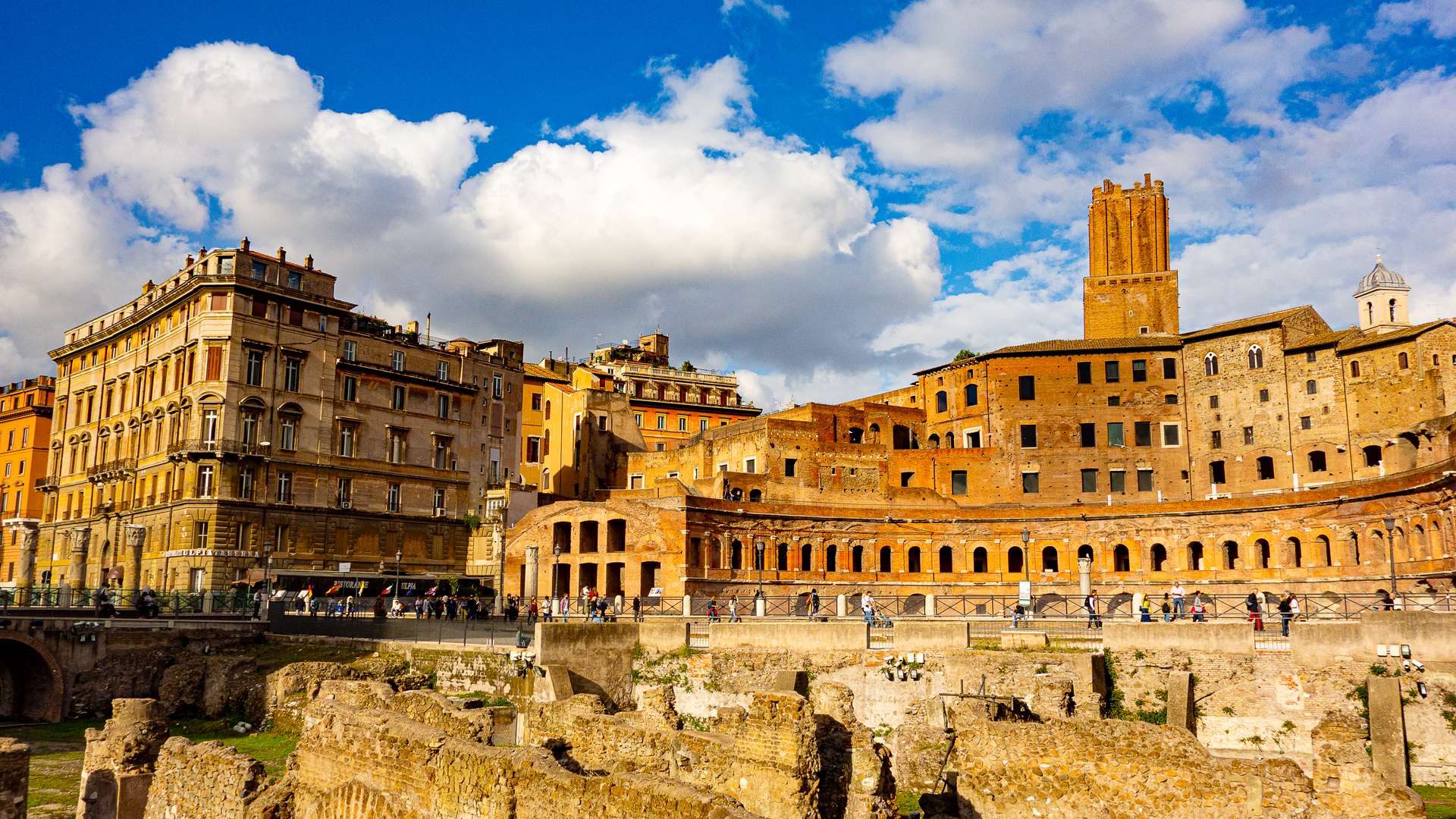
Roman ruins 

One of the highlights of that beautiful city is St Peter’s Basilica, a church built in Vatican City and generally regarded as one of the greatest works of Renaissance architecture.
Its central dome is instantly recognisable as it dominates the city skyline.
Outside, the main facade is beautiful enough but it is only once inside that the almost overwhelming beauty of the Basilica reveals itself. Look at the link I’ve provided here for a fully detailed list of the treasures within but, to give you an idea, Michelangelo’s Pieta is tucked away in a small niche (relatively speaking) because, you know, there are SO MANY other important works just lying around to be seen.
The effect that such an assembly of beauty can have on an individual even has its own name - Stendhal syndrome - a condition whereby a person becomes so overwhelmed by the onslaught of great beauty that they faint or even hallucinate at the scale of it all.
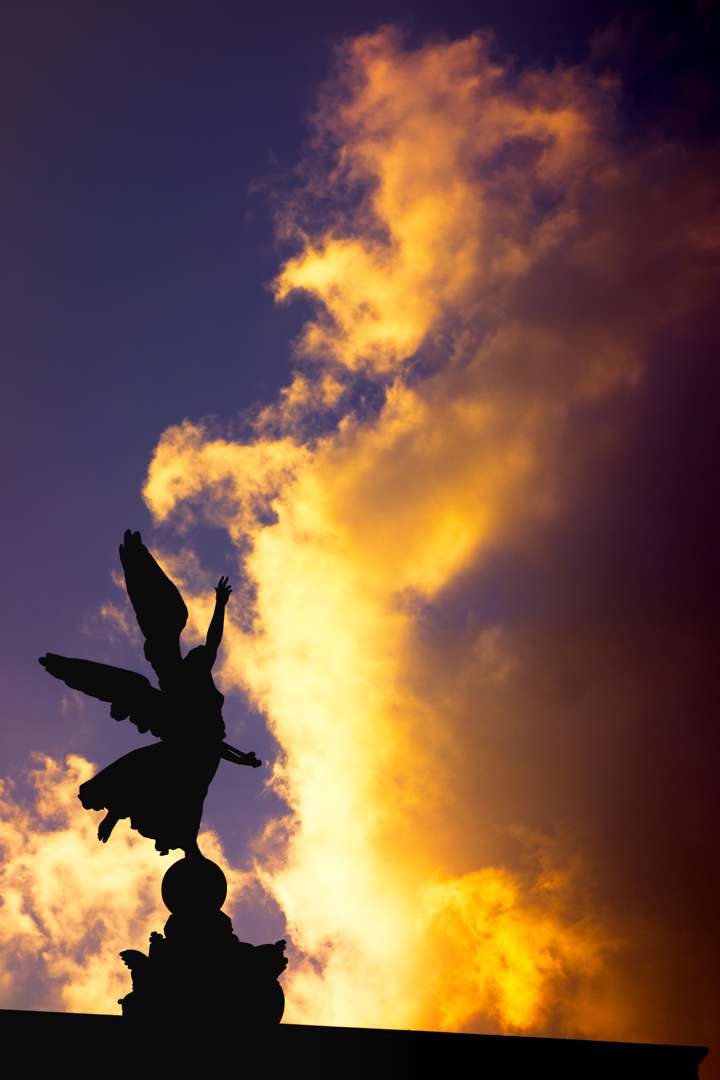
Angel of Rome

One of the highlights of that beautiful city is St Peter’s Basilica, a church built in Vatican City and generally regarded as one of the greatest works of Renaissance architecture.
Its central dome is instantly recognisable as it dominates the city skyline.
Outside, the main facade is beautiful enough but it is only once inside that the almost overwhelming beauty of the Basilica reveals itself. Look at the link I’ve provided here for a fully detailed list of the treasures within but, to give you an idea, Michelangelo’s Pieta is tucked away in a small niche (relatively speaking) because, you know, there are SO MANY other important works just lying around to be seen.
The effect that such an assembly of beauty can have on an individual even has its own name - Stendhal syndrome - a condition whereby a person becomes so overwhelmed by the onslaught of great beauty that they faint or even hallucinate at the scale of it all.

Rome sunset

St Peter's Basilica interior

To quote from the Wiki page:
‘The staff at Florence's Santa Maria Nuova hospital are accustomed to tourists suffering from dizzy spells or disorientation after viewing the statue of David, the artworks of the Uffizi Gallery, and other historic treasures of the Tuscan city.’
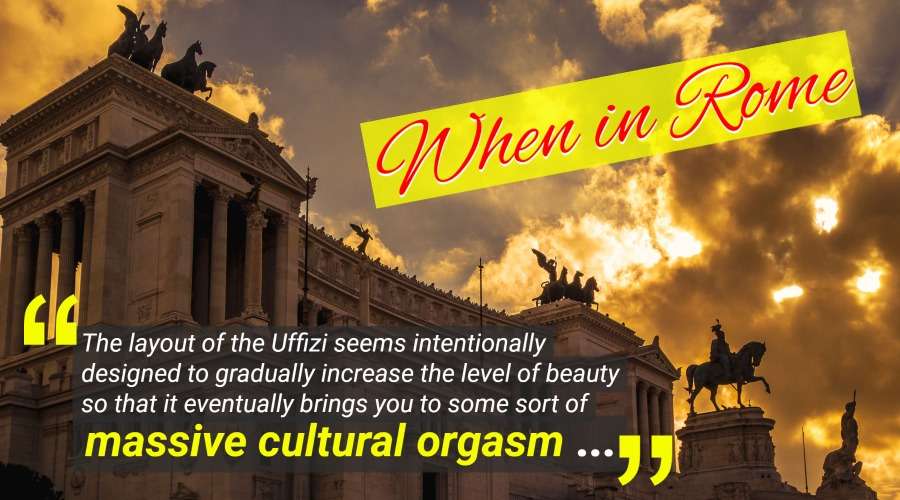
I’ve been there and know what they mean. The layout of the Uffizi seems intentionally designed to gradually increase the level of beauty so that it eventually brings you to some sort of massive cultural orgasm.
But let’s return to Rome and the Basilica interior.
Faced with this staggering beauty and being a photographer, I naturally took a few shots. I soon realised, however, that this was a pointless exercise. Looking back on even the best taken photograph would not capture the scale of the architecture, the sense of space, the sheer number of beautiful artworks that surrounded me - and in truth, the crowds and the lighting would not allow you to get all but an average photograph.

St Peter's Basilica interior

You could stay there for days and only see a fraction of it. If, like me, you can study a single sculpture for 10-20 minutes and still feel as though you’d rushed it a little, the Basilica truly was overwhelming.
So I took what I think of as ‘holiday shots’ - those made as a reminder for me and not something I would think to show others - found myself a place with a good view and sat down to simply look at the place, absorb its unique atmosphere and marvel at the skill and artistry involved in its creation and execution. I changed my seating location two or three times but each time sat for 30-40 minutes to simply enjoy what surrounded me.
I did this for just over two hours and it was a wonderful experience.
While I was doing it, a strange phenomenon occurred
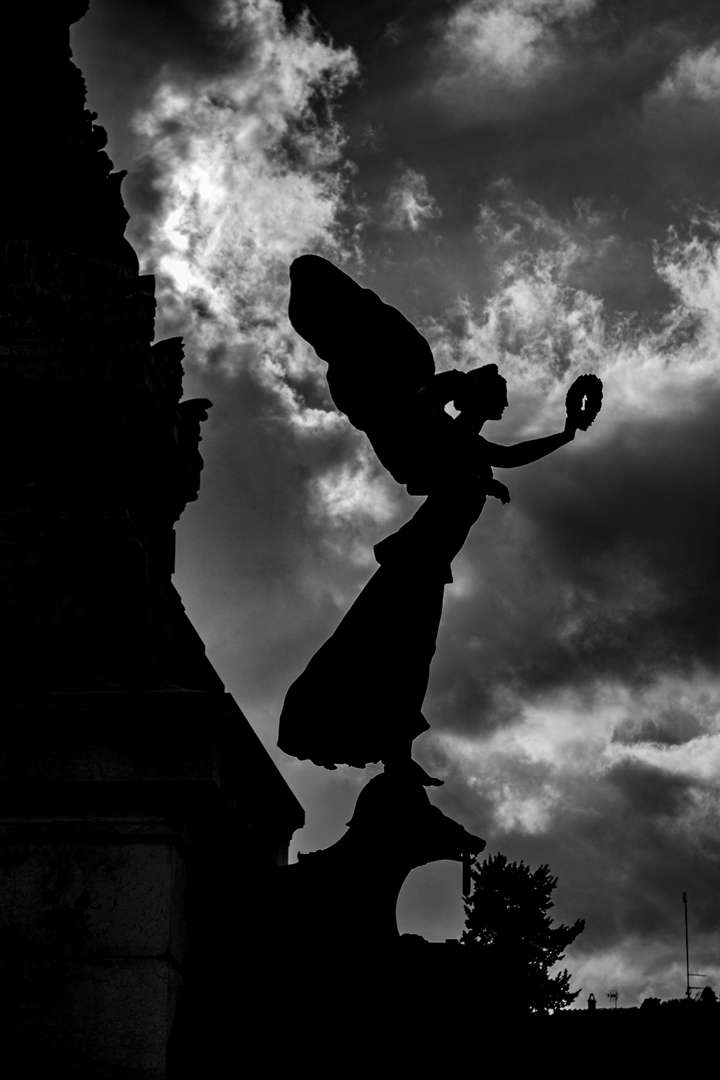
Angel with garland
You could stay there for days and only see a fraction of it. If, like me, you can study a single sculpture for 10-20 minutes and still feel as though you’d rushed it a little, the Basilica truly was overwhelming.
So I took what I think of as ‘holiday shots’ - those made as a reminder for me and not something I would think to show others - found myself a place with a good view and sat down to simply look at the place, absorb its unique atmosphere and marvel at the skill and artistry involved in its creation and execution. I changed my seating location two or three times but each time sat for 30-40 minutes to simply enjoy what surrounded me.
I did this for just over two hours and it was a wonderful experience.
While I was doing it, a strange phenomenon occurred

Angel with garland

Nice place to work

In my stillness, watching the crowds around me, I began to feel like time had slowed with me. Lines and lines of people appeared to whizz past me as if speeded up, so many of them holding a camera between them and the beauty of the space, filming it to watch later - but honestly, how many times do you watch those videos you spend so long filming on holiday? Twice at most?
Why travel to one of the most beautiful spaces in the world and walk around the entire time looking at it through a viewfinder? Buy the book instead. Get the Vatican blu-ray (I’m sure there is one) because the book and the video will have been produced to a much higher quality than even the most expensive camera can capture on a normal tourist trip. They’ll be properly lit and framed from angles we can’t possibly access and by spending a few extra bucks you’ll free up that time to see the place as was intended, with all your senses, not through a tiny viewfinder.
You’ll make a richer memory.

Nice place to work

One of my guests chimed in on this, saying that she had been told by so many people that she must photograph everything on a trip to see wildlife in Kenya that she spent so much time behind the camera she felt like she had actually ‘seen’ nothing.
I’m not suggesting that you don’t take any photos or video when you travel. Just that you don’t take so many that you spend all your time looking through a viewfinder.
Don’t miss having the true experience of experiencing a place because you’re too busy trying to record it.
That really is a wasted opportunity.

Rome sunset

Credit where credit is due

I ❤️ BRUNO MARS BUT CREDIT WHERE CREDIT'S DUE

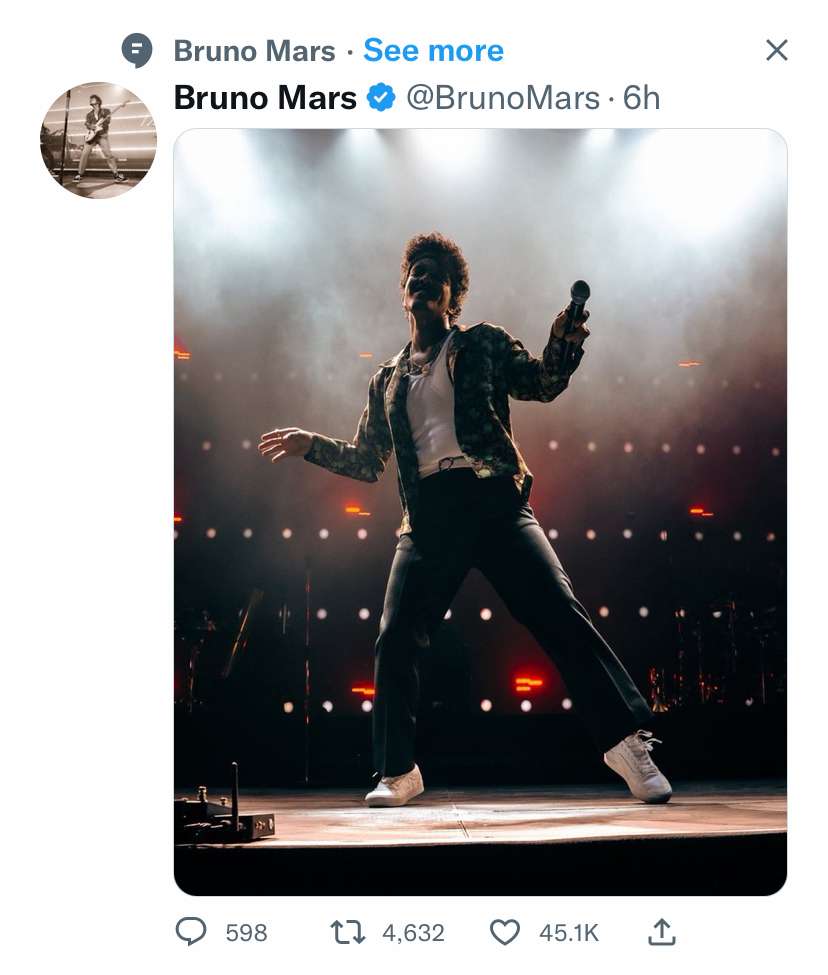
I happened to be idly scrolling through Twitter this weekend when I came across this post from @BrunoMars.
As you can see from the post (below), it simply contains the photo, no text or anything else. Clearly, Mr Mars (or whoever manages his account) was so taken with this shot that they decided it spoke for itself and would be a great promotion for him on its own. So it went on his feed for his 43.1 million followers to see.
However, my immediate reaction was - where’s the photographer's credit? It’s either an event photographer’s shot or possibly a photographer who is part of the Mars touring team but why doesn’t their name accompany the shot? I’m sure they'd appreciate those 43.1 million viewers seeing their name.
Even given that the photographer has been paid for his or her work, why would you not credit them?
Even if they don’t legally insist, it’s a usually accepted courtesy that you credit anyone whose work you use on your site/feed.

Now before the internet does its usual trick of taking the wrong end of the stick and running with it, let me repeat that I’m not suggesting Mr Mars or his team has done anything illegal. The photos have almost certainly been properly acquired by his management for reproduction.
My point is to ask the question why a credit to the creator of the work he so much admires is not present? If you reproduced Mr Mars’ work, or the work of any other creator on your social media or website, a credit would be given - music by, artwork by, web design by…
You expect to see it. My question is:
What has changed that it’s seen as ok not to credit a photographer anymore?
Part of it, I think, is that we are so used to seeing photographs online without any credit that we think nothing of it. We just expect photos to ‘be there’.
Also, I think that people think that if a photo is online or you have taken a photo of them, they have the right to reproduce it without payment or credit. This is SOOOO not the case but let me give you a true-life example of where this type of thinking can lead.
A few years ago, when I ran my web-design business, I was commissioned by a local artist to photograph their work at their home and then make a website for them. I worked on a flat-fee and as I knew the artist fairly well, made an exception and agreed full payment on completion.
I went to their home and took the photographs of their work, edited them and posted them in an online gallery for approval.
I received an email from the artist advising me that they were receiving treatment for an illness and would be out of the loop for a while but that they would get back to me as soon as they were feeling better.
A few months passed during which I heard nothing. Then, one morning, I opened my email to see a group email from this artist sent to 80-90 people, announcing that their new website was launching and inviting them to go and look at it. I did, only to see that my photographs had been downloaded and used on the site that someone else had made for them.
Given that the client and I had not even started on the design process for their site I was, as I’m sure you can imagine, both stunned and angry.
They had taken my photographs without my permission and used them without payment or consent.
This is why I now watermark shared images. However, the artist stated that they had used the photos ‘in all innocence’ as they ‘thought the photographs belonged to them’ as they were photos of their work.*
Now,  in case you’re wondering what the law is in regard to photographs, it’s quite simple. The copyright to a photograph belongs to the person who took it, unless they have agreed otherwise. If I give you my camera and you take a photo on it, the copyright of that photo is yours, not mine.
Because of that, I need your permission to reproduce it and most photographers ask that a credit accompany their image. Even if they don’t insist, it’s a usually accepted courtesy that you credit anyone whose work you use on your site/feed. Certainly if it’s the sole image on a post.

So even if you have paid for an image by a photographer, if you’re going to use their work - especially for self-promotion - give them a credit like you would to anyone else whose work you would use on your site.

*After several terse emails I am pleased to report that I got paid in full for the job mentioned above as agreed. Emails to the site designer got no response. They should have known the law. 

Changes

CH…CH…CH…CHANGES

Given that I am spectacularly old - honestly, it's a wonder that I can stand up most days - I have seen many great changes to what photography actually is.
From film to digital; print to social media; decent quality cameras in unbelievably tiny phones; photorealistic images created by AI; I’ve been through all that and seen how it changes the general perception of photography. The changes are huge and as with change of all kinds, some love it and some hate it.
In the broadest sense, there are two main changes to our great art:

    • PHOTO TECHNOLOGY

I fall on the side of ‘technology changes are good’; the fact that everyone has a high-quality camera in their pocket at all times - courtesy of their phone - is a boon. Should you decide to up that quality even further by moving up to a mirrorless camera - no, not a DSLR - it means that the tech at your fingertips becomes even more exciting.
There hasn’t been a bad camera made for well over a decade now and they’re all stuffed with the kinds of features that you would have paid thousands of pounds for within that last decade.
So in my book, tech good!

    • PHOTO CONSUMPTION

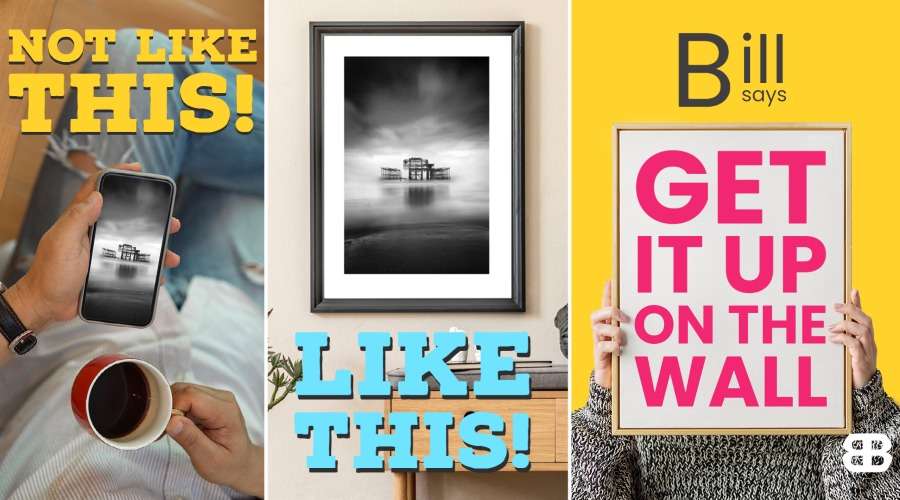
The most noticeable change in photography is how we view our images. Usually, it’s on a phone. Occasionally a tablet or larger monitor. Rarely, in print, which prior to technological evolution, had been the only way to see photos for decades.
‘So, what’s the difference?’ I hear you ask.
‘Quality’ would be my reply.


This change in how we view our images has led to a subtle shift in the attitude of photographers towards their own work. Many photographers no longer see any reason to make what most of the prior generations of photographers - whether amateur or professional - would call a high-quality image. I’m not talking about the artistry of the photographs when I say high-quality but the actual rendition of them.
The reason?
They have never seen their work printed.
It used to be the only way we could see our images. A considerable number of modern photographers don’t know about the huge difference in quality - through both greater colour accuracy and increased level of detail - that printing your images brings. Now the most common way we see our images is in a low resolution format (JPEG) on a tiny screen. 

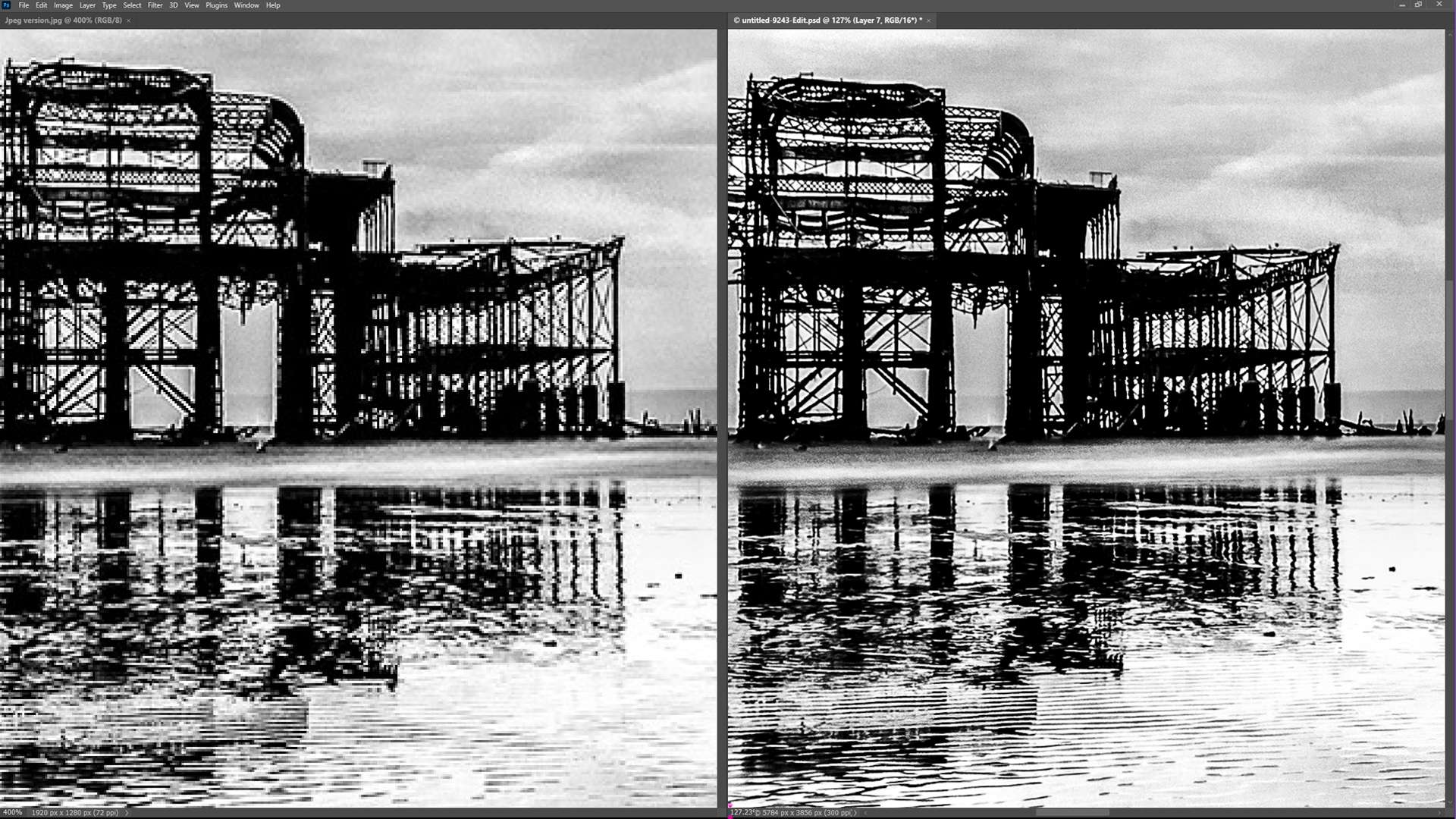
When you toil over the edit on your monitor to create that pin sharp, tonally stunning photograph, understand that is not the image the rest of us see online. By the time you’ve compressed it to a 72dpi jpeg (a low resolution lossy format) most of that detail and range of colour is gone. Images online are ‘crushed’, reducing colour range and detail, all lost to save file size. Your server may further compress the image to a WebP format.

Look at the examples below. 

CLICK TO ENLARGE

Both images are a screen shot from Photoshop. The image on the right is the full image, the image on the left the Jpeg meant for online use.
In the photo of the pier, fine details are removed completely. Look at the intricate steel works in the pier and the loss of detail in the reflections.
In the portrait,  skin tones are 'roughened', the delicacy of eyelash and pupil detail is completely lost.
Online versions of a photo are only an 'approximate' look. Add in the differences that monitor colour shifts and different brightness settings make and the photographer's actual intent can be quite far removed form what you're looking at.

And when your image leaves your big monitor to be rendered on a phone screen and the image is only an inch high? I’ll let you reach your own conclusions…
And here’s another thing…
Once the photo you spent hours editing is displayed on a different monitor it will look different. Colours will shift, the shadows and light will be different. All the things that matter in a photograph will be changed. That’s why photographers who are serious about seeing and presenting their images accurately print them.
And this is not a professional vs amateur distinction, either. Look at it another way:
You have a friend who loves the soft delicacy of pastel colours. You knit them a pale blue scarf - knitting and photography?! You talented bunny - but when you give it to them it changes into a vivid blue scarf and therefore they don’t like it. That’s what happens when your photo is seen on someone else’s phone or monitor. Those lovely inky blacks you made? Gone, because their brightness setting is higher than yours. That beautiful, pale blue you shot? Vanished, thanks to a Vivid saturation mode.
A print cannot be changed by viewing. A screen image can because all screens render colour and light differently. How you view changes the quality of an image to the extent where I’ve had portrait clients shocked by the detail and quality they see in their printed images.
And all this is without me mentioning the horrible shock you get when you first start printing your images and realise that some of the photos that looked great when you saw them on screen look terrible when enlarged to print size.
The changes that realisation makes to your photography? Well, that's a whole other article…