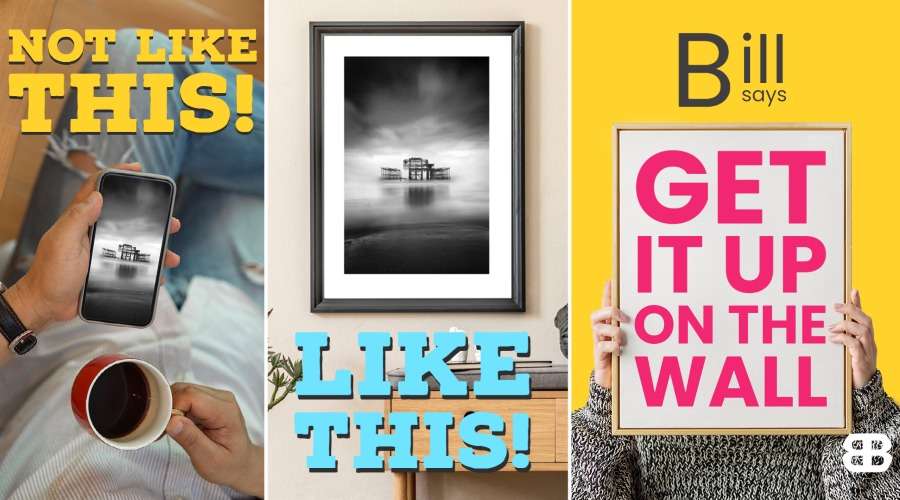
CH…CH…CH…CHANGES
Given that I am spectacularly old - honestly, it's a wonder that I can stand up most days - I have seen many great changes to what photography actually is.
From film to digital; print to social media; decent quality cameras in unbelievably tiny phones; photorealistic images created by AI; I’ve been through all that and seen how it changes the general perception of photography. The changes are huge and as with change of all kinds, some love it and some hate it.
In the broadest sense, there are two main changes to our great art:
-
- PHOTO TECHNOLOGY
I fall on the side of ‘technology changes are good’; the fact that everyone has a high-quality camera in their pocket at all times - courtesy of their phone - is a boon. Should you decide to up that quality even further by moving up to a mirrorless camera - no, not a DSLR - it means that the tech at your fingertips becomes even more exciting.
There hasn’t been a bad camera made for well over a decade now and they’re all stuffed with the kinds of features that you would have paid thousands of pounds for within that last decade.
So in my book, tech good!
-
- PHOTO CONSUMPTION
The most noticeable change in photography is how we view our images. Usually, it’s on a phone. Occasionally a tablet or larger monitor. Rarely, in print, which prior to technological evolution, had been the only way to see photos for decades.
‘So, what’s the difference?’ I hear you ask.
‘Quality’ would be my reply.
This change in how we view our images has led to a subtle shift in the attitude of photographers towards their own work. Many photographers no longer see any reason to make what most of the prior generations of photographers - whether amateur or professional - would call a high-quality image. I’m not talking about the artistry of the photographs when I say high-quality but the actual rendition of them.
The reason?
They have never seen their work printed.
It used to be the only way we could see our images. A considerable number of modern photographers don’t know about the huge difference in quality - through both greater colour accuracy and increased level of detail - that printing your images brings. Now the most common way we see our images is in a low resolution format (JPEG) on a tiny screen.
When you toil over the edit on your monitor to create that pin sharp, tonally stunning photograph, understand that is not the image the rest of us see online. By the time you’ve compressed it to a 72dpi jpeg (a low resolution lossy format) most of that detail and range of colour is gone. Images online are ‘crushed’, reducing colour range and detail, all lost to save file size. Your server may further compress the image to a WebP format.
Look at the examples below.
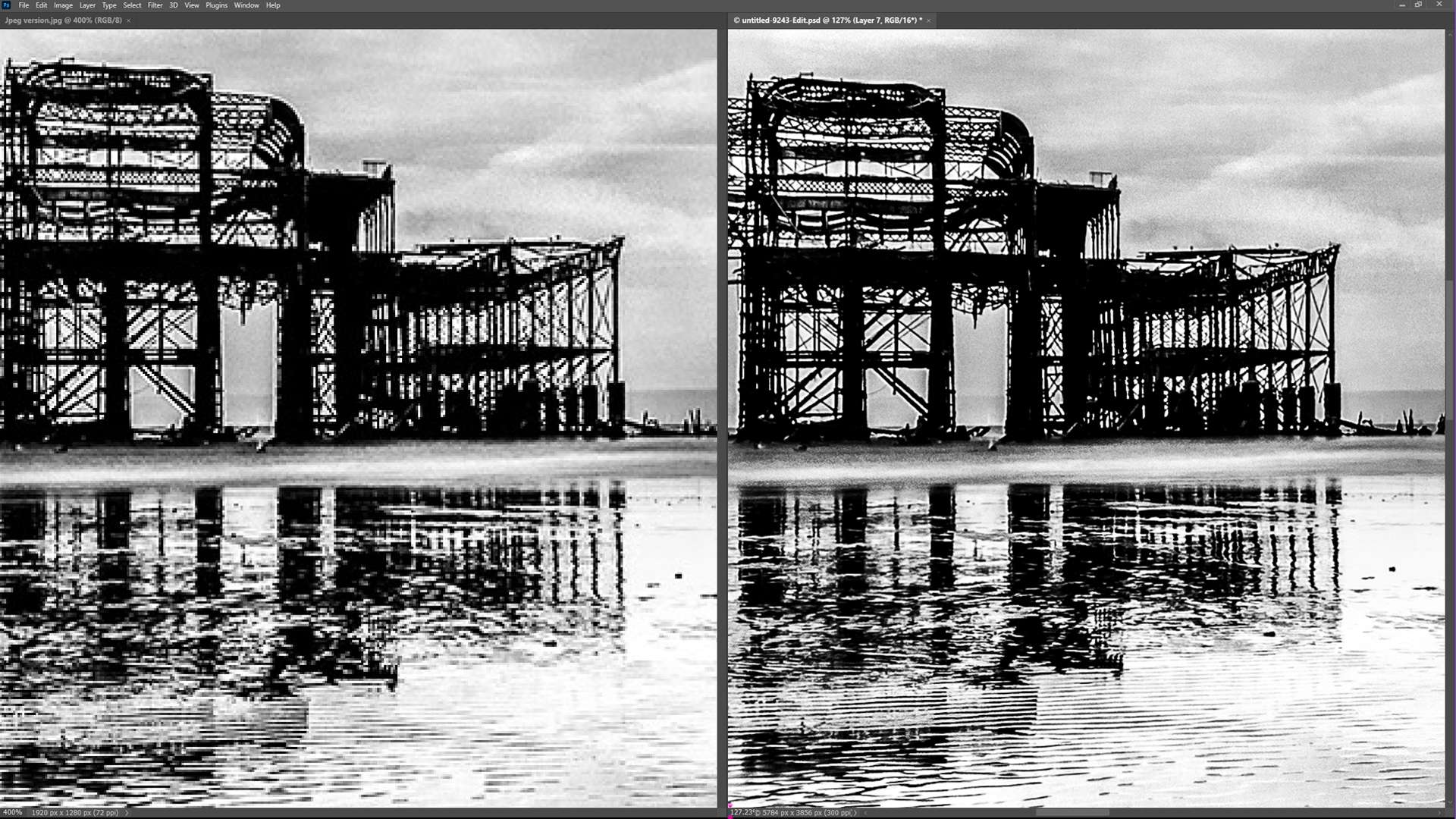

CLICK TO ENLARGE
Both images are a screen shot from Photoshop. The image on the right is the full image, the image on the left the Jpeg meant for online use.
In the photo of the pier, fine details are removed completely. Look at the intricate steel works in the pier and the loss of detail in the reflections.
In the portrait, skin tones are 'roughened', the delicacy of eyelash and pupil detail is completely lost.
Online versions of a photo are only an 'approximate' look. Add in the differences that monitor colour shifts and different brightness settings make and the photographer's actual intent can be quite far removed form what you're looking at.
And when your image leaves your big monitor to be rendered on a phone screen and the image is only an inch high? I’ll let you reach your own conclusions…
And here’s another thing…
Once the photo you spent hours editing is displayed on a different monitor it will look different. Colours will shift, the shadows and light will be different. All the things that matter in a photograph will be changed. That’s why photographers who are serious about seeing and presenting their images accurately print them.
And this is not a professional vs amateur distinction, either. Look at it another way:
You have a friend who loves the soft delicacy of pastel colours. You knit them a pale blue scarf - knitting and photography?! You talented bunny - but when you give it to them it changes into a vivid blue scarf and therefore they don’t like it. That’s what happens when your photo is seen on someone else’s phone or monitor. Those lovely inky blacks you made? Gone, because their brightness setting is higher than yours. That beautiful, pale blue you shot? Vanished, thanks to a Vivid saturation mode.
A print cannot be changed by viewing. A screen image can because all screens render colour and light differently. How you view changes the quality of an image to the extent where I’ve had portrait clients shocked by the detail and quality they see in their printed images.
And all this is without me mentioning the horrible shock you get when you first start printing your images and realise that some of the photos that looked great when you saw them on screen look terrible when enlarged to print size.
The changes that realisation makes to your photography? Well, that's a whole other article…